Broad-Based Emergency Liquidity
United Kingdom: Extended-Collateral Long-Term Repo
Purpose
The ELTRs reduced “the economic costs of disruptions to the commercial banking system’s provision of liquidity and payments services,” while assisting “commercial banks in financing assets that had suddenly become illiquid” (Bank of England 2008k).
Key Terms
-
Launch DatesAnnouncement: December 12, 2007; Operational: December 18, 2007
-
Expiration DateJune 2010
-
Legal AuthorityPre-existing Bank of England authority to initiate open market operations
-
Peak OutstandingGBP 180 billion in January 2009
-
ParticipantsRegular open market operations participants
-
RateDiscriminatory, minimum bid introduced later
-
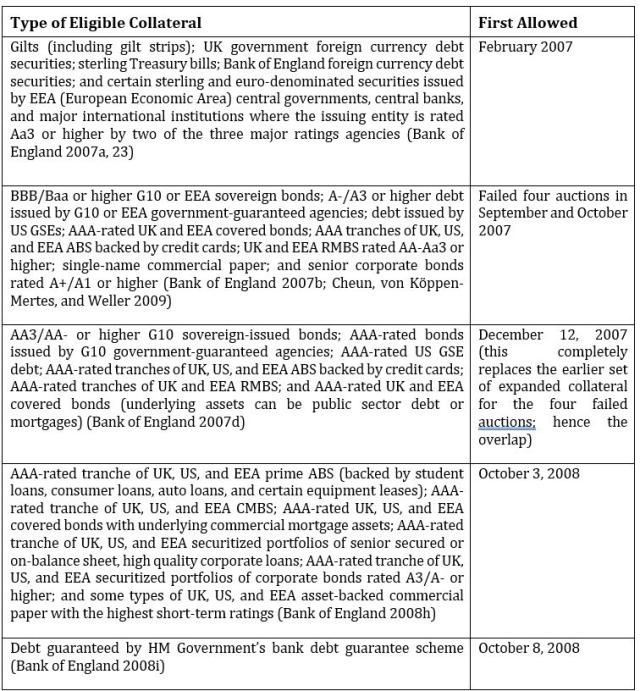
CollateralThe ELTRs widened the usual set of eligible collateral to include certain private sector securities.
-
Loan DurationThree-month maturities
-
Notable FeaturesThe BoE issued one-week bills to banks to drain the excess liquidity
-
OutcomesImproving market conditions and reserve balances

Key Design Decisions
Purpose
Part of a Package
Management
Administration
Eligible Participants
Funding Source
Program Size

Individual Participation Limits
Rate Charged
Eligible Collateral or Assets

Loan Duration
Other Conditions
Impact on Monetary Policy Transmission
Other Options
Similar Programs in Other Countries
Communication
Disclosure
Stigma Strategy
Exit Strategy
Key Program Documents
Taxonomy
Intervention Categories:
- Broad-Based Emergency Liquidity
Countries and Regions:
- United Kingdom
Crises:
- Global Financial Crisis